|
|
|
HERITAGE QUILT EXHIBIT: Pieces of History: Threads That Bind Us through May 26
Tazewell County Old Time & Bluegrass Fiddlers' Convention Hold the date: July 11-13, 2008
Crab Orchard Museum and Pioneer Park opened in 1982 as a non-profit historical museum named for the National Landmark historic site on which we are located.
I n the last decade, we have emerged as the most comprehensive cultural heritage museum in the middle Appalachian mountains. The county and region abound in unusual experiences for all travelers and vacationers. Be sure to make use of our travel and research links.
If you are interested in learning more about the Appalachian region, our museum gift shop has many books available. All can be purchased by calling the Museum and providing credit card information.
The Museum relies on the financial and volunteer support of hundreds of interested people, both in its immediate community and throughout the United States. Government support is not sufficient to keep our doors open to the public.
The Museum Endowment Fund, a perpetual trust that is invested conservatively, ensures that we will continue to carry out our mission with quality and excellence. Bequests are especially important to the Museum Endowment Fund's growth.
If you are interested in supporting us, please become a member and receive our quarterly newsletter, the Pisgah Pathfinder and all the other benefits.
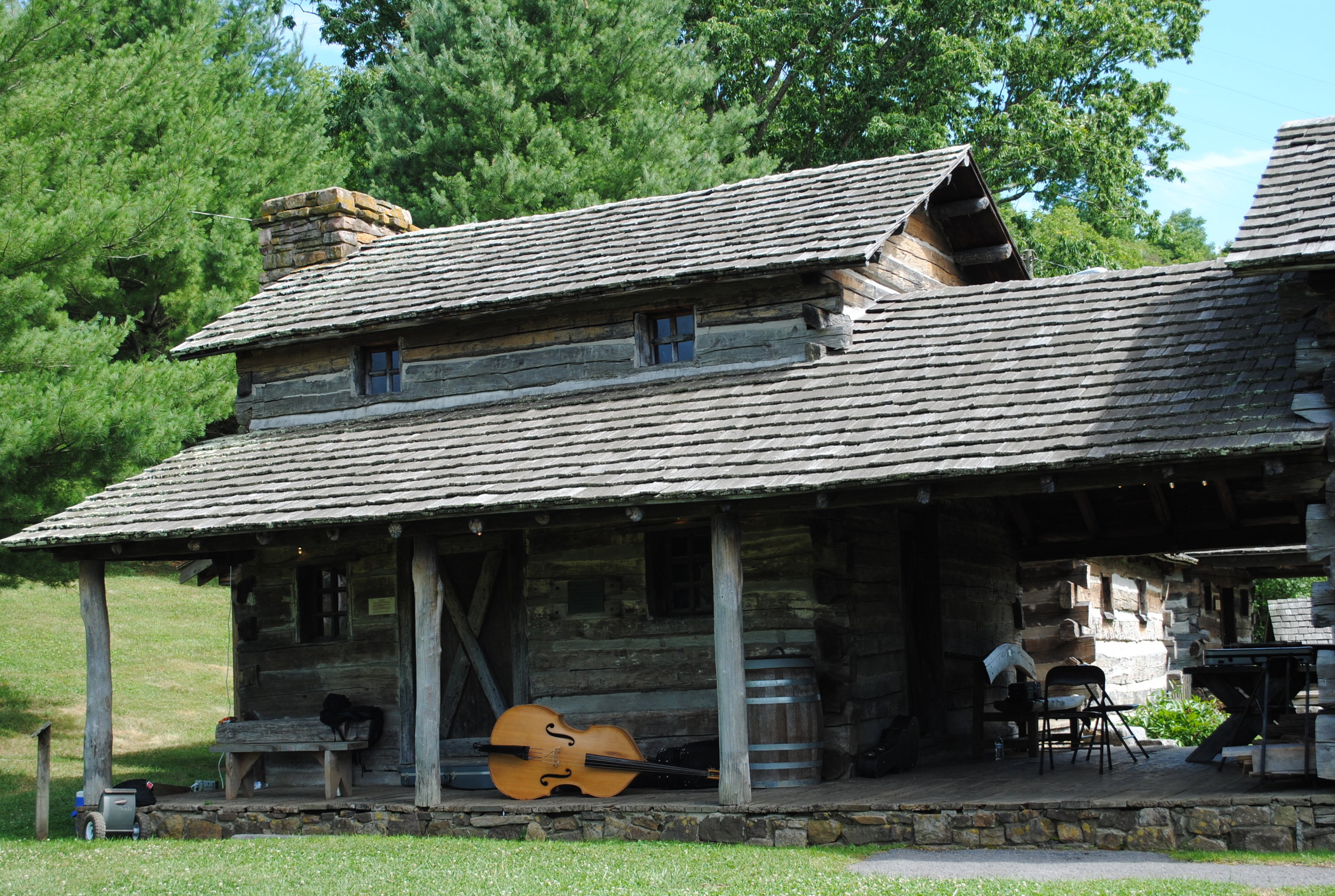
WE'RE VISITOR FRIENDLY Our staff and volunteers are well known for helpfulness and hospitality. Our grounds are tranquil and your visit will be restful. The Pioneer Park is a favorite venue for photographers and artists interested in depicting life on the early American frontier.
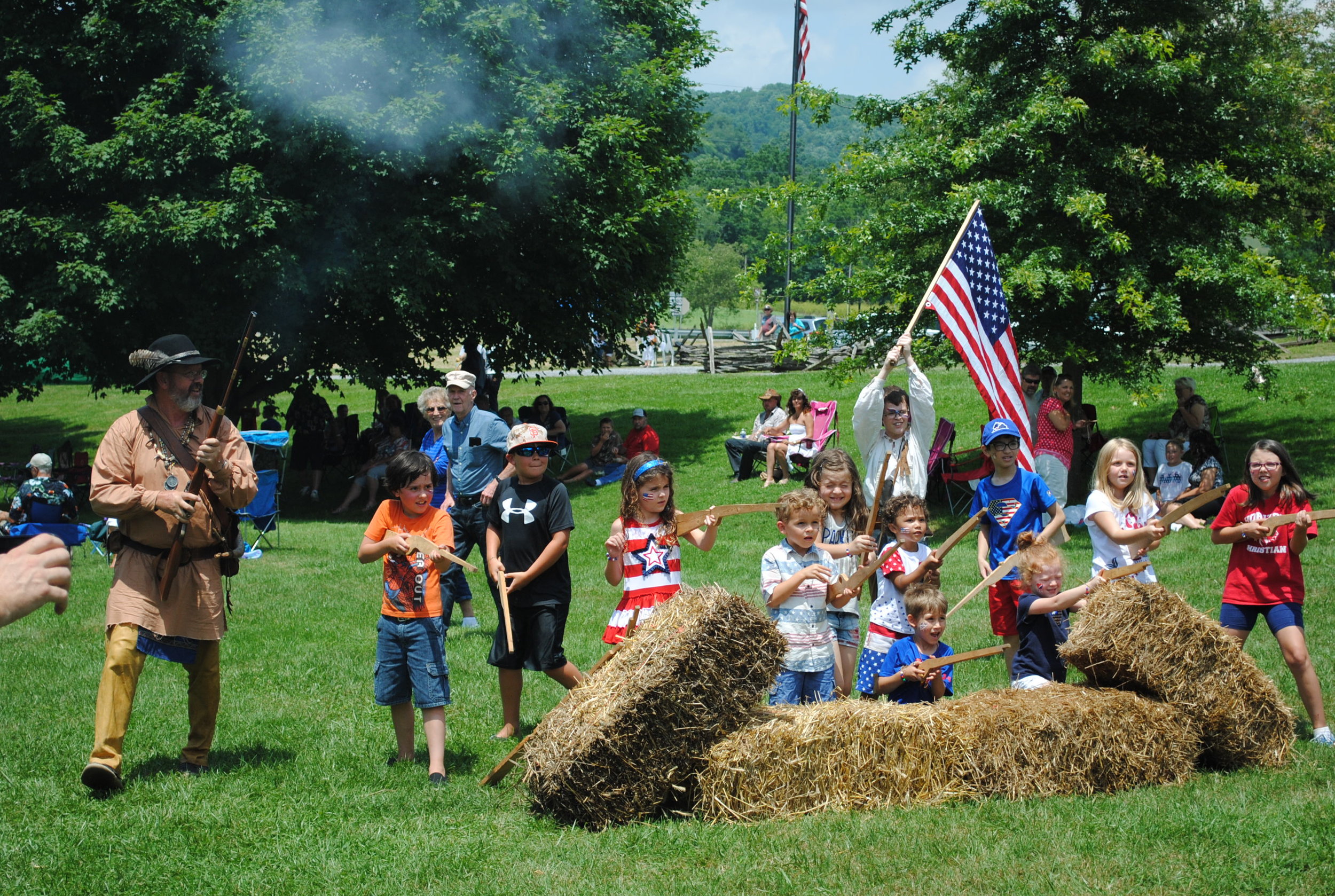
On occasion we have living history programs to show visitors what life was like on the Virginia frontier.
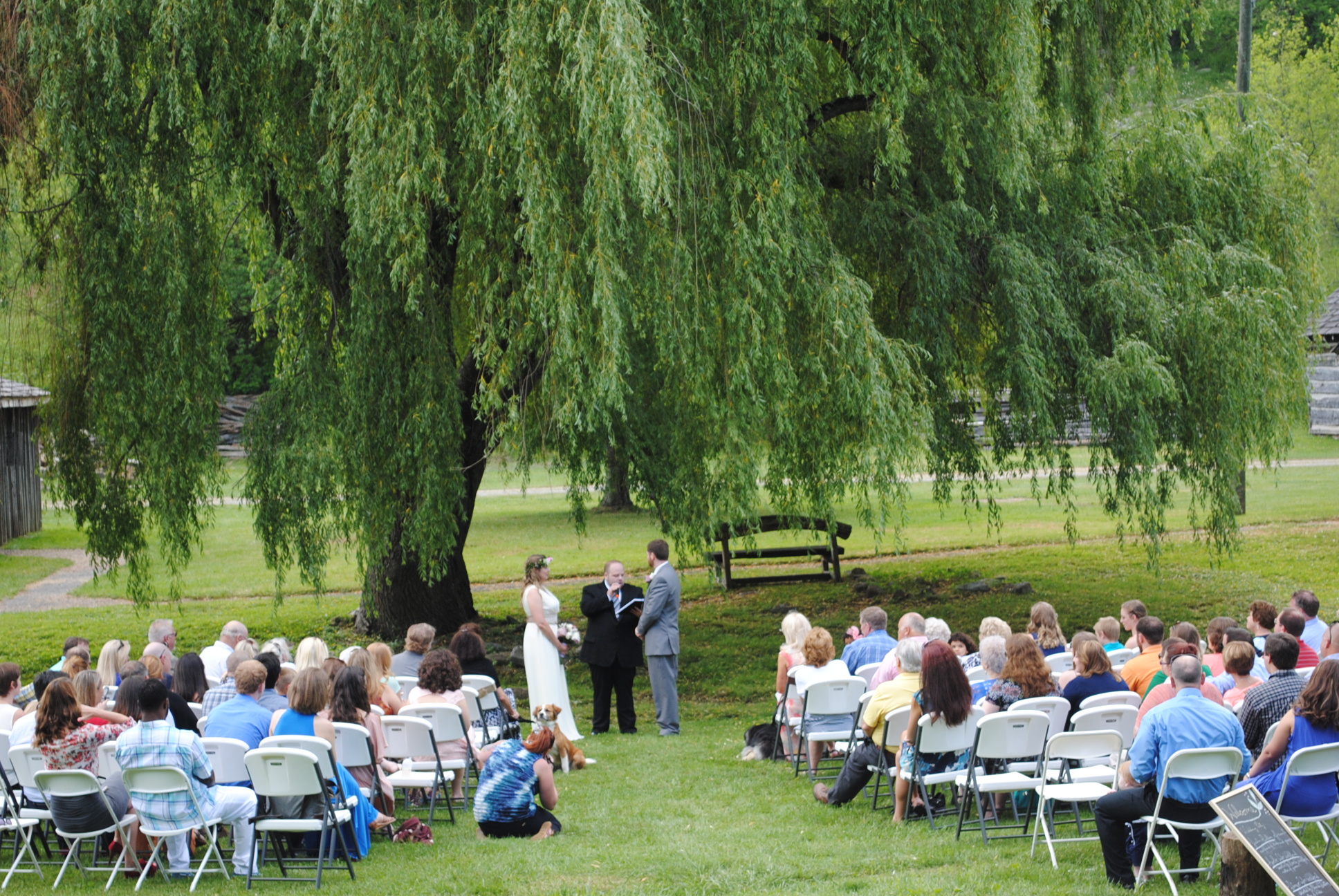
Our exhibit galleries and our grounds are available for private functions of various kinds. Every effort is made to accommodate weddings, family reunions, worship services, and other events within the scope of our facilities. Our fees are as economical as possible. Special consideration is given to our Members, for whom fees are discounted or waived.
WE SERVE OUR YOUTH
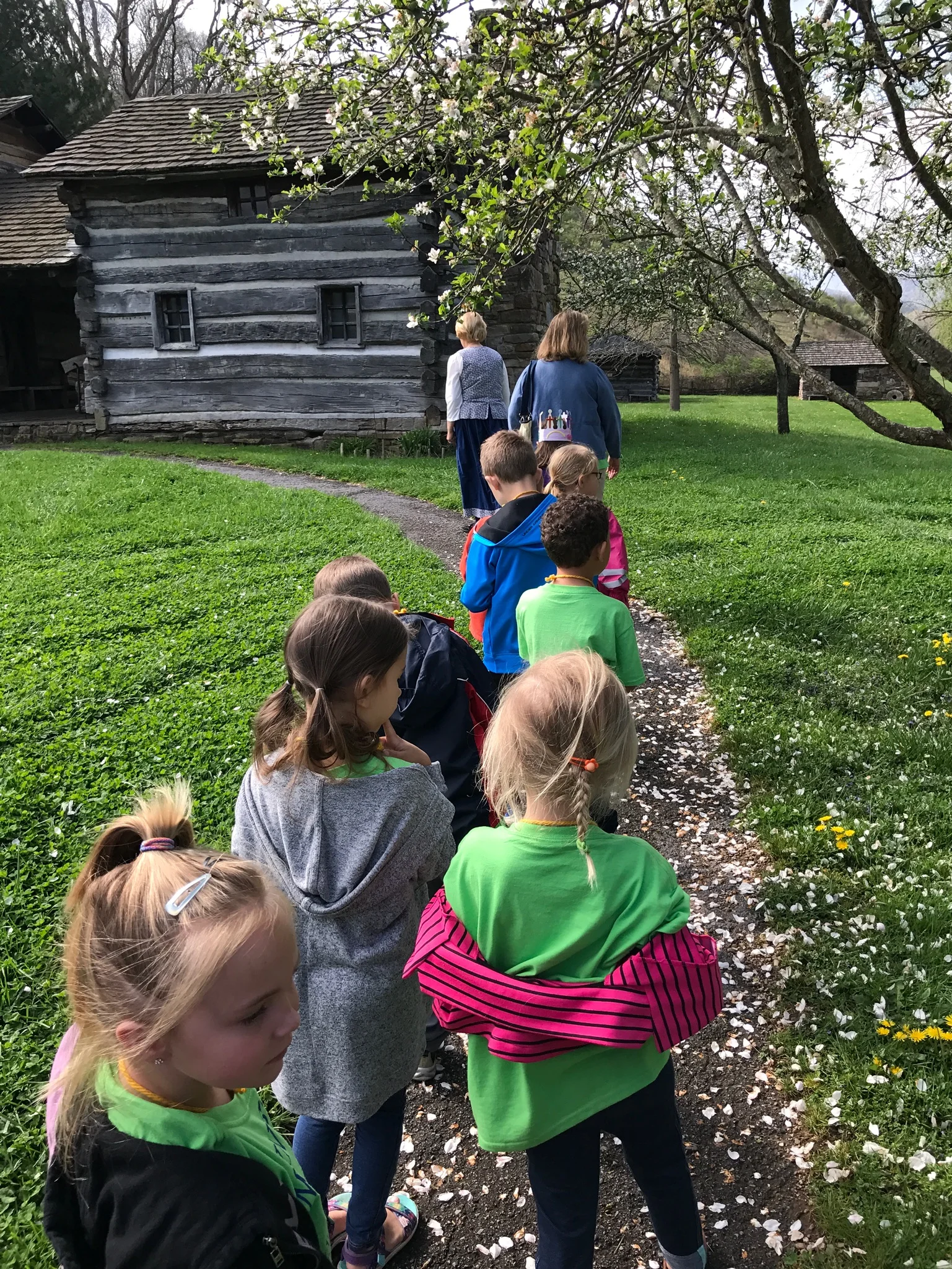
The Museum is an educational institution, whose most important work is serving young people in a wide region, as well as offering special educational experiences like the Summer Pioneer Apprentice Camp.
In a year's time, we provide learning opportunities for 6,000 school children on and off site.
Young people interested in the arts find a home at Crab Orchard Museum. We are a creative organization, interested in nurturing those with artistic and related talents and interests.
TAMING THE WILDERNESS
Thousands of years before pioneers of European origin settled the Virginia colony, it was inhabited by various Indian tribes and before them, the nomadic Indians of the Clovis period.
When the Witten family established the first farm in what is now Tazewell County, sometime around 1770 around what is now the Museum site, members of the Cherokee nation in North Carolina were still using the area as a place for hunting and to reside temporarily. English-speaking Melungeon farmers had been encountered here a century earlier by explorers sent out from Jamestown, VA. Spanish conquistadores also explored the region in the 1500s, but did not settle.
The Wittens came from Maryland. Other early settlers came from Northern Virginia, North Carolina, Pennsylvania, and New England, among other places. What seemed to draw them to this region was its distance from any of the colonial capital cities that were dominated by Great Britain.
Even after the colonies achieved independence, many pioneers left the eastern cities and farmlands of the new states to seek freedom -- freedom from the hierarchies of the various American faiths, and freedom from the rather aristocratic officials who first governed the states and the United States.
Baptists, persecuted elsewhere, found the Tazewell County region to be an isolated safe haven, where one of the earliest settlements quickly became known as Baptist Valley.
Government was distant, and land was plentiful, even though it was mountainous and untamed. A civilization emerged that has gone down in history as unlike any other in America.
Using artifacts obtained found in archaeological digs around the Museum, and objects handed down from the earliest families, the Museum tells a fascinating story of how both Indians and then settlers of European descent tamed the wilderness. Our collection of regional antique woven coverlets, largest of its kind, makes it clear that the women went to great lengths to provide color in their simple log homes, whenever they weren't out working on the farms. The settlers were earnest in their study of Holy Scripture, and quick to establish schools for their children.
Learn more about the region called "Appalachia" in which Tazewell County emerged as a leading cattle and sheep producer, and the source of coal for almost a century. Our galleries and Pioneer Park show you how this part of Appalachia developed. Home furnishings indicate what families bought as they began to increase their incomes.
WE ARE AN HISTORICAL RESOURCE The Tazewell community has other resources as well.
The Jeffersonville branch of the county library system (in the Town of Tazewell) has a room set aside for researchers. Among its resources are microfilmed newspapers dating back to the late 19th century, and a variety of genealogical and historical books and monographs devoted to this and other counties in the region.
County records date back to 1800, and are available for inspection by visiting the office of the Circuit Court Clerk. Tazewell is one of the relatively few Virginia counties whose original records were not damaged or destroyed during the Civil War.
At present, we are unable to respond to letters or calls asking detailed genealogical inquiries for lack of staff to carry out this research. Volunteers at the Tazewell County Historical Society are often available to assist and the Society can refer you to qualified genealogists if necessary.
MOSTLY, WE WANT YOU TO VISIT US!
The
I guarantee that you will have lots to talk about when you return home. Our best advertising is by word of mouth. It works! Our visitors come even when it snows!
See what Southern Living had to say about us in their June 2004 issue by clicking here
|